
Why change your AC filter?
An air filter’s job is to keep dust and debris out of your HVAC equipment, which can reduce performance and lead to breakdowns. In this article, we’ll explain why air conditioner filter replacement is so important, and how to change your AC filter safely.
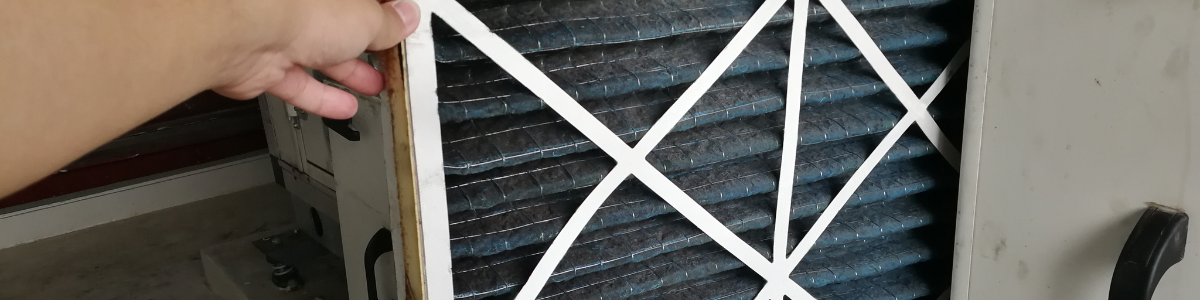
When your AC filter gets clogged, dust and dirt start getting into the air conditioner itself, causing wear and tear on the parts. The more wear and tear, the sooner they wear out and cause a breakdown. A clogged filter also prevents enough air from flowing through the system to keep it working properly.
Watch this quick video to learn what happens when you don’t change the AC filter:
According to ENERGY STAR, you should check and change your AC filter every month during peak season if it looks clogged. That’s probably more often than you want to call your trusty HVAC service guy. So it’s helpful to know how to change the AC filter yourself.
How to change an AC filter
Follow these easy steps to change the AC unit filter and keep your system running reliably.
1. LOCATE THE FILTER
AC air filter replacement is a quick and easy task. Before you can do it, though, you need to know where the AC filter is located. There are several places it could be.
In some systems, the filters are located in the return air duct. This is the one that pulls air from your space back into the air conditioner’s air handler system. If you have a large system with multiple air handlers and return ducts, finding the filters can be tricky.
If both your heating and air conditioning systems share the same ducts, it’s also possible that the air filter for both systems is located in or near the blower system for the furnace. If so, it’s usually in the front of the furnace near the bottom. You may be able to see and access the filter without opening anything, or you might have to open a metal panel (marked FILTER) on the front or the top of the blower. The panel may be attached with hooks or screws.
Your best bet is to ask your HVAC service technician. Just let him know that you want to learn how to change the AC filter, and he’ll be able to show you where the filter is located, how to remove the old one and insert the new one, and how to get the right filters for your system.
2. GET THE RIGHT REPLACEMENT FILTER
The other potentially tricky part is making sure you use the right filters. The filter size is usually printed on the side of the filter. When in doubt, the easiest solution is to ask your HVAC tech to get you a supply of the right filters, or show you the size information on the filter so you can order them yourself.
Also, keep in mind that you might want filters that do more than just keep dust out of your air conditioner. If you want to improve air quality in your space by removing pollen, mold and other harmful contaminants, you can invest in filters with a higher MERV rating.
IMPORTANT: Consult with an HVAC expert before purchasing higher efficiency filters for your system! In some cases, the decreased air flow can lead to a decline in performance, and even repair issues. Also, your system might not be able to accommodate the size of the filter.
Learn more: Alleviate Spring Allergies: Air Filters and MERV Filter Ratings.
3. STEPS TO REPLACE
1. TURN OFF THE POWER. This is important for two reasons. First, there’s your safety. Don’t risk touching live voltage! The second reason is the safety of your equipment. If the unit is still running while you’re removing the clogged filter, dust and debris can get sucked into the unit. It’s important that you switch off power at the unit itself, and also at the circuit breaker.
2. Remove the old filter. Simply slide it out of the slot that holds it in place.
3. Check the condition. Once you’ve taken out the AC filter, check the condition. Does it look clogged with dirt and dust? If you hold it up to the light, you probably can’t see much light coming through. This filter needs to be replaced or cleaned, depending on the type of filter you are using. Even if it’s been in use less than the time recommended by the manufacturer, replace it anyway. Many factors can impact how fast your filters get clogged. If you’re in New York City, the smog alone can shorten the life of an air filter.
4. Dispose of the old filters safely. In case there may be contaminants on the filter, place it inside a plastic bag and throw it away in a trash receptacle outside your space.
5. Clean the filter (or clean a reusable one). Are you using disposable filters or reusable ones? A disposable filter typically has a cardboard frame and a paper or fiber mesh surface. A permanent, reusable filter is made of a more sturdy material with a metal frame and a special coating to make it washable. If you’re cleaning a reusable one, check the manufacturer’s instructions for washing. You’ll probably just need to rinse with water and let dry completely. Or in some cases, you can just vacuum away the dust.
6. Insert the new or cleaned filter. Now you just need to put it back in the right way. An arrow on the filter’s frame shows you the direction that air should flow through the filter, which is always away from the return air duct and toward the air handler mechanism. When you insert the filter back in the housing, make sure that arrow points away from the return and toward the air handler.
See, wasn’t that easy? Now that you know how to change an AC filter, set a reminder for yourself so you remember to check it every month. And, don’t forget about your furnace if its filters are separate from your air conditioner: Fall Furnace Maintenance: How to Change Your Air Filter.
Step up your HVAC maintenance
If you don’t have a regular HVAC service tech to ask about how to change an AC filter, it’s likely that you’ve been neglecting other important maintenance tasks besides changing AC filters. Regular maintenance keeps your equipment in top working condition so the parts last longer and work more efficiently. That means the system uses less electricity, needs fewer costly repairs, and has an extended life span.
The best way to get the most from your HVAC equipment is to get a preventative maintenance agreement. It’s a relatively small investment that pays off in lower operating costs and more reliable comfort. Plus, you can get an agreement that’s customized to your specific needs, your equipment, and your budget. If you’re in the NYC metro area, let’s talk.